
In early December 2024, the journalistic community was outraged by the behavior of Oleksandr Kovalenko, a military political columnist who represents the Information Resistance group. While live on Kyiv TV channel, after anchor Iryna Korol asked a clarifying question, the guest arrogantly interrupted the journalist: “Hush! Hush! I am the invited expert here!”
Most journalists publicly condemned the rude aggression exhibited by the guest of the show, and some media announced their decision to refrain from inviting Kovalenko in the future or approaching him for comments.
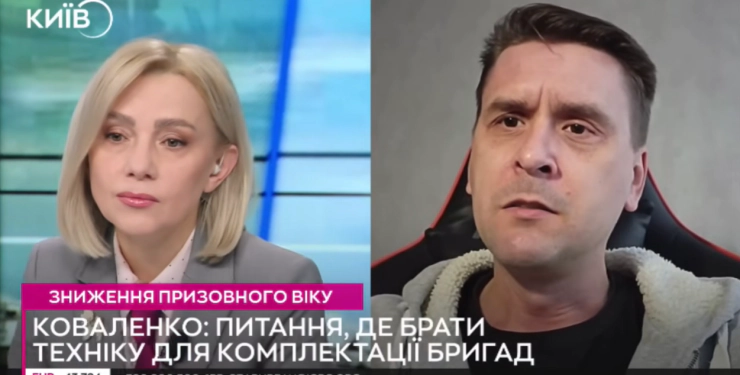
This case highlighted the problem of choosing competent experts, which has always been a crucial part of working on a journalistic material. Choosing the right person is not easy, especially when the media space is full of alleged pundits in various sectors. Media professionals can find it challenging to assess the commentator’s level and predict things like their response during a live broadcast.
These recommendations by the Commission on Journalistic Ethics will help journalists avoid mistakes in choosing experts and maintain objective coverage.
1. Start by analyzing the expert’s qualifications. Do they have specialized education, the required experience, or is their workplace connected with the subject that is discussed? Do they have access to primary sources or have unique knowledge, or can they only share information that is already available to the public?
This check makes sense even if the expert is frequently invited by other media outlets. The fact that a person is popular in the media, has a blog or a YouTube channel with a million subscribers is not a guarantee of their professionalism (see example of pseudo-psychologist Spartak Subota). Many people who write analytical publications on social media and have an audience of followers cannot necessarily be considered experts on these issues.
A new massive wave of pseudo-experts, including military ones, arose in Ukraine in 2022 after the full-scale invasion. Commentary about hostilities, enemy attacks and defense counterattacks, predictions about the end of the war and the invaders’ plans was offered by bloggers, unprofessional analysts, people without relevant experience or education (such as Andrii Vasyliev, better known as writer Dorje Batuu). Calling such people “experts” misleads the audience (e.g., “What Fate Awaits Komarovskyi After Statement to Give Up Territories — Tarot Reader Makes a Prediction”).
2. A competent expert usually provides commentary on issues that are directly relevant to their experience and relies on facts to support their statements. Anyone willing to speak on any subject from vaccination to US elections is an unreliable source, and journalists should view it as a red flag.
It should be noted that narrowly specialized experts, such as medical workers, may have different opinions on the same issue. In this case, the audience should be provided with different views.
3. Pay attention to the expert’s communication style. Look up their previous comments and materials and check them for sensationalism and/or categorical statements. People with true expertise take into account various factors and opinions and refrain from jumping to conclusions. What makes pseudo-experts so popular, though, is the use of the same methods as propaganda.
This is what should alert you:
- emotional vocabulary;
- value judgments;
- clickbait;
- manipulation;
- fakes;
- unverified information and rumors;
- apocalyptic or, conversely, overly optimistic forecasts, etc.
In short, check for anything that evokes strong emotions and that would not be allowed by journalistic standards and ethics.
4. Check not only knowledge, but also reputation. It is worth finding out whether your guest is connected to political forces, as well as monitoring which media outlets they worked with, when, and what they said.
One’s posts and comments on social media say a lot about their position, connections, and expertise. They also provide an idea about their biased or impartial attitude: for instance, they may indicate a conflict of interest. When you invite a stock trading company owner to comment on the situation on the stock market, they are not an invited expert, they are somebody with vested interest in the situation.
5. Clearly differentiate between experts and guests you invite to share their experiences. For example, an athlete can talk about her own preparation for a competition, while an expert will be able to assess the training process of the national team or the country overall.
It makes sense to ask in a personal interaction whether a certain topic is within the person’s scope of expertise at this point. Has the expert changed their specialization, focus area, research subject etc.? Ask different people different questions depending on the information they have.
6. Build your own contact database, ask for advice from verified experts, experienced colleagues, guest editors, in professional communities and trusted social media groups. Also seek advice from media organizations with their own databases.
7. Avoid your own bias in choosing experts: for example, it is a mistake to imagine that only a man in military uniform can comment on any aspects of the situation on the frontline. Strive to ensure a lineup of experts in your media outlet that would represent different viewpoints and be gender-balanced and reasonable.
Even with verified expertise, invitees do not have the right to resort to personal insults, discriminatory or offensive language, to express contempt, threats, or aggression directed at journalists, hosts, other guests, or the audience. If a situation like that occurs live, the journalists / hosts should stop the conversation and, condemning the expert’s actions, distance themselves from this person’s behavior.
The Commission supports media initiatives to include such experts in the list of “unwanted guests” on other information platforms.
8. Establish and develop trusting relationships with those experts whose comments were valuable to your material.
Explain to what extent and in what form you are planning to use the recorded conversation. If you plan to use only a small fragment as a quote in your material, let them know in advance. Explain more about the format of the material, its duration, further dissemination on various platforms. Clarify numbers and specific terminology before publishing the material. Thanks to your trust and professionalism, there will be more competent, independent experts in the Ukrainian media.
How do you verify an expert?
Among other things, the Commission recommends using existing databases available in Ukraine to verify experts.
- Database of pseudo-sociologists and secret PR reps by Texty;
- Database of Russian propagandists by the volunteer initiative How Not to Become a Vegetable;
- Kremlin’s Voices by Internews;
- PolitHub database of politicians and political parties by CHESNO movement;
- Google Scholar to check the expertise of scholars and scientists;
- YouControl.
Where do you find experts?
- Official government structures and organizations;
- Research institutions;
- Civil society organizations, professional associations and communities;
- Think tanks;
- Specialized expert databases (such as Ask a Woman by the Povaha campaign against sexism).
These recommendations were developed within the project by the Commission on Journalistic Ethics with the support of UNESCO and the people of Japan. The authors bear the sole responsibility for the selection and presentation of facts contained herein and for the opinions expressed herein, which do not necessarily belong to UNESCO and do not impose any obligations on the Organization.