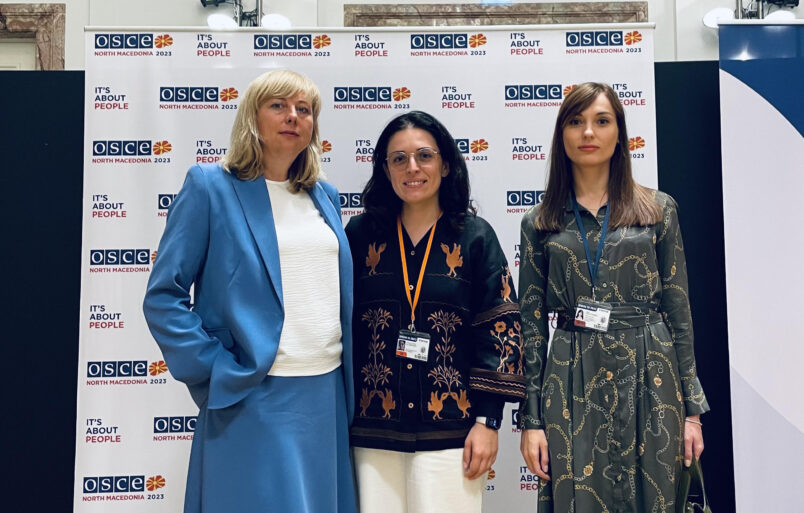
Within the framework of cooperation with the OSCE project “Strengthening the Capacity of Media to Apply Journalism Standards and Promote Media Literacy,” Liza Kuzmenko, the Member of the CJE, participated in the third supplementary OSCE conference on the human dimension “The Role of Civil Society in Promoting and Protecting Tolerance and Non-Discrimination”, Vienna, 26-27 June 2023.
On June 26, a meeting was held with colleagues from the Office of the OSCE Representative on Freedom of the Media. During the meeting, important issues regarding further cooperation in developing media literacy in Ukraine and the institution of media self-regulation were discussed.
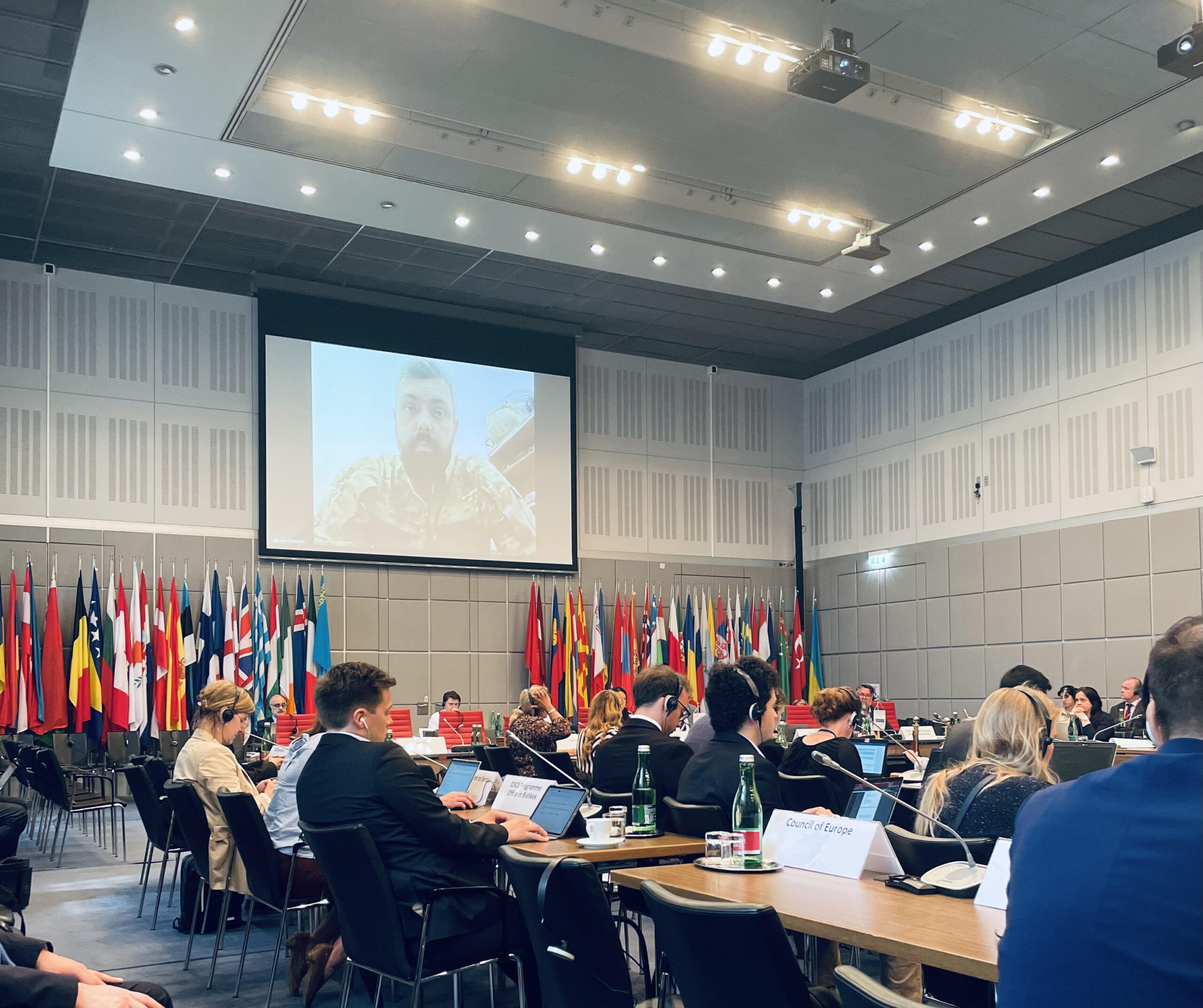
On the same day, participation took place in the opening plenary session and the first working session, where the role of civil society in promoting tolerance, combating discrimination, and countering hate crimes was discussed.
On June 27, participation took place in the second and third sessions of the conference, during which the topics of tolerance and non-discrimination, including during the Russian war against Ukraine, were discussed.
Communities at risk across the OSCE region, including Roma, continue to face widespread discrimination and intolerance in many areas of life including in policing, justice systems, housing, education, employment, health and public and political participation. Such treatment is fueled by harmful discourse and stereotyping and often leads to hate crimes and violence. Bias-motivated crime against members of communities at risk has a long-lasting impact on victims and their communities. Women from communities at risk, including Roma, are often victims of discrimination and hate crime based on both ethnicity and gender, which perpetuates inequality, raises security threats, and sends a plain message of exclusion. Already vulnerable people who fled the war in Ukraine experienced increased hate speech from various stakeholders as well as discriminatory attitudes in access to border crossing, information, shelter, education and employment.
The overall response to people fleeing Ukraine in countries hosting them has been characterized by a clear commitment to provide support. However, as the war continues and sustainable return of people back to Ukraine is not yet in sight, tensions with communities at risk could develop in host countries. Securing sustainable, longer-term integration support that will facilitate the social inclusion of people fleeing Ukraine is therefore crucial. In addition, the stark contrast between approaches to different groups of people in need of international protection raises difficult questions about the state of human rights of migrants and refugees in the OSCE region, non-discrimination, adherence to the Convention Relating to the Status of Refugees and other Conventions, and the universality of human rights.
The visit contributed to expanding contacts with representatives of OSCE participating states, civil society, employees of the OSCE Representative on Freedom of the Media Office, and the Ministry of Culture and Information Policy of Ukraine.