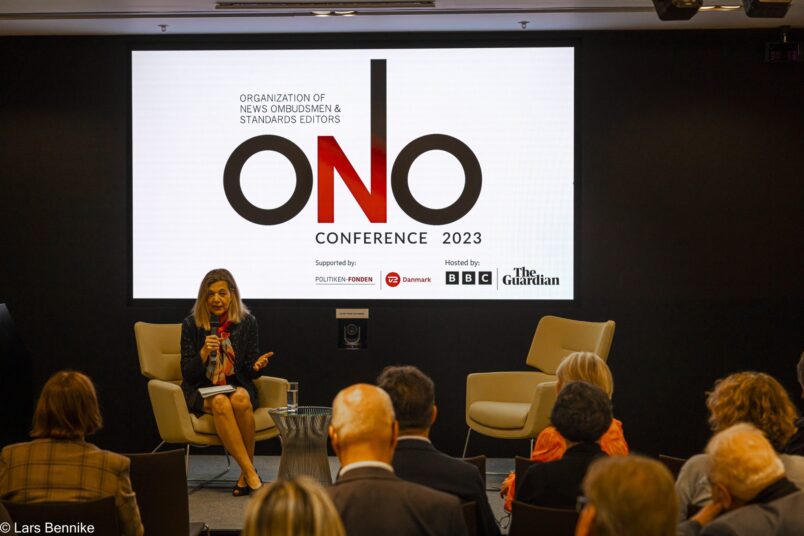
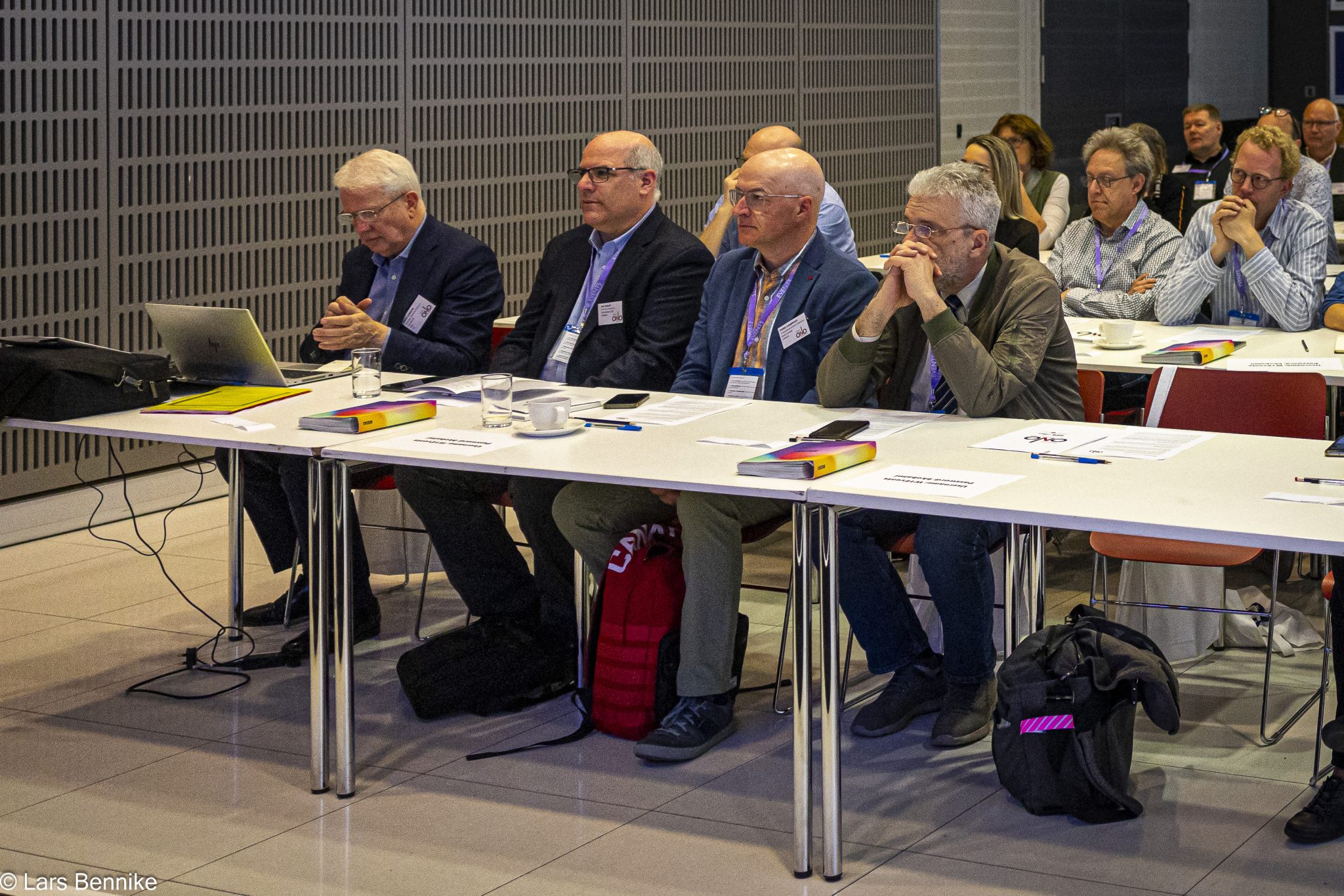
The 2023 ONO (The Organization of News Ombudsmen and Standard Editors), held in London, UK, on 31 May-2 June, 2023, became another proof of the common nature of the problems facing professional high-quality journalism at present. The IMS support for a Ukrainian participant’s involvement has become instrumental in showing that this may be useful both to Ukrainian and international media, provided there are close links and mutual learning.
Wherever the participants and guests came from, they all emphasized the critical importance of upholding professional (including ethical) standards in order for journalism to continue to play a significant role in supporting the democratic development of societies the world over.
The panel discussion dedicated to Ukraine paid significant attention to the challenges for Ukrainian journalists and media arising from the Russian aggression against this country. Among the topics discussed, attention was paid, in particular, to the issue of staying objective while covering the big story itself and various subtopics, including reporting losses and damage, quoting the aggressor’s speakers, talking to survivors, as well as avoiding sensationalism and reporting the issue within the international context. The panel also stressed that the concept of post-truth and its variations do not work where the issues of humanitarian nature are concerned, and when it is necessary to accord just definitions of war crimes and crimes against humanity are discussed.
Throughout the discussion, the role of traditional media, even pronounced by some as diminishing or vanishing (radio and printed press being the most eloquent examples), was underlined as important in view of their proximity of the audience and their natural ability to keep in close touch with the audience.
The role of social networks as the prime source of information was viewed with well-justified skepticism, while it was also stressed that social media can’t be ignored because they have numerous audiences. The thing here is that traditional media’s participation in social networks should be guided by the same standards that have proven their feasibility in journalism.
Attempts to use a simplistic view of the issue of balance (measuring it mechanically) were basically rebuffed, with the idea of providing a well-founded analysis of circumstances and consequences where necessary.
The issue of artificial intelligence and the changes it brings about in the everyday work of the media was, in the opinion of this author, given too much attention. This, in essence, again raises whether we correctly apply the term “fake news” only to invented or bent stories while not using it in relation to the issues the significance of which we tend to exaggerate. The AI issue may serve as an example of such an exaggerated significance, thus placing it in the category of fake news not because it is untrue but because it is of not the level of importance that would justify the amount of attention it is being given.
Some members of the ONO suggested that the Ukrainian Commission for Journalism Ethics becomes an associate member of the ONO because Ukraine now provides a lot of material to monitor and draw conclusions from in order to be used in other countries should similar situations arise elsewhere. This mutual learning and understanding may also be useful in precluding such situations from happening.
Andriy Kulykov
Head
Commission for Journalism Ethics